
Recovery Zone Care: Combining Hands-On Therapy with Active Movement
Recovery Zone Care is a San Jose wellness center known for integrating hands-on orthopedic and sports massage with active movement practices like Qigong, Yoga, and Tai Chi. This guide explores how this dual approach supports comprehensive physical recovery. It covers the specific modalities offered, the science behind combining passive and active healing, and how clients can structure their care for optimal results.
Hands-On Therapy Modalities
Recovery Zone Care utilizes a specialized system of manual therapy to address acute and chronic pain. The primary modality is the Hendrickson Method, which is an advanced system of orthopedic massage and manual therapy designed to treat pain efficiently. This method utilizes Wave Mobilization massage techniques, Joint Mobilization dynamic movements, and Muscle Energy Techniques to provide deep relief without the discomfort often associated with traditional deep tissue work.
Beyond the core Hendrickson Method, the practice integrates several specific therapeutic tools. These include Myofascial Release, Instrument Assisted Soft Tissue Mobilization (IASTM), and Manual Lymph Drainage. Each tool serves a distinct purpose in the recovery process. For instance, Manual Lymph Drainage is used to gently reduce fluid retention in the extremities, while IASTM helps break down scar tissue and improve tissue elasticity.
Post-Surgical and Sports Massage
The clinic also specializes in post-surgical massage, which is a specialized intervention designed for the recovery phase following an operation. Unlike traditional massage, this approach focuses on the surgical region to alleviate discomfort and reduce swelling. Similarly, sports massage is focused and systematic, targeting muscles used in specific activities to decrease pain and improve range of motion.
Active Movement Classes
While hands-on therapy addresses immediate pain, active movement practices are essential for long-term mobility and strength. Recovery Zone Care offers a variety of movement-based classes that are accessible to all levels of fitness and mobility. These classes are designed to strengthen the body and mind while increasing stability and flexibility.
The primary movement disciplines offered include Wuji Qigong, Hatha Yoga, and Yang-style Tai Chi. Wuji Qigong is a practice that focuses on simple, easy-to-learn exercises and movement patterns to melt away stress and open joints. Hatha Yoga provides a foundation for physical strength and balance, while Tai Chi offers a slow, flowing sequence of movements that enhance coordination and mental focus.
Corrective Exercise and Functional Movement
In addition to group classes, the practice incorporates Corrective Exercise Therapy. Corrective exercise therapy is a type of physical therapy used to improve posture, balance, and coordination by identifying movement dysfunction. This approach is often recommended for individuals who have experienced pain or injuries or who have poor body mechanics. By combining these active practices with manual therapy, clients can address the root causes of their pain rather than just the symptoms.
The Integration of Passive and Active Healing
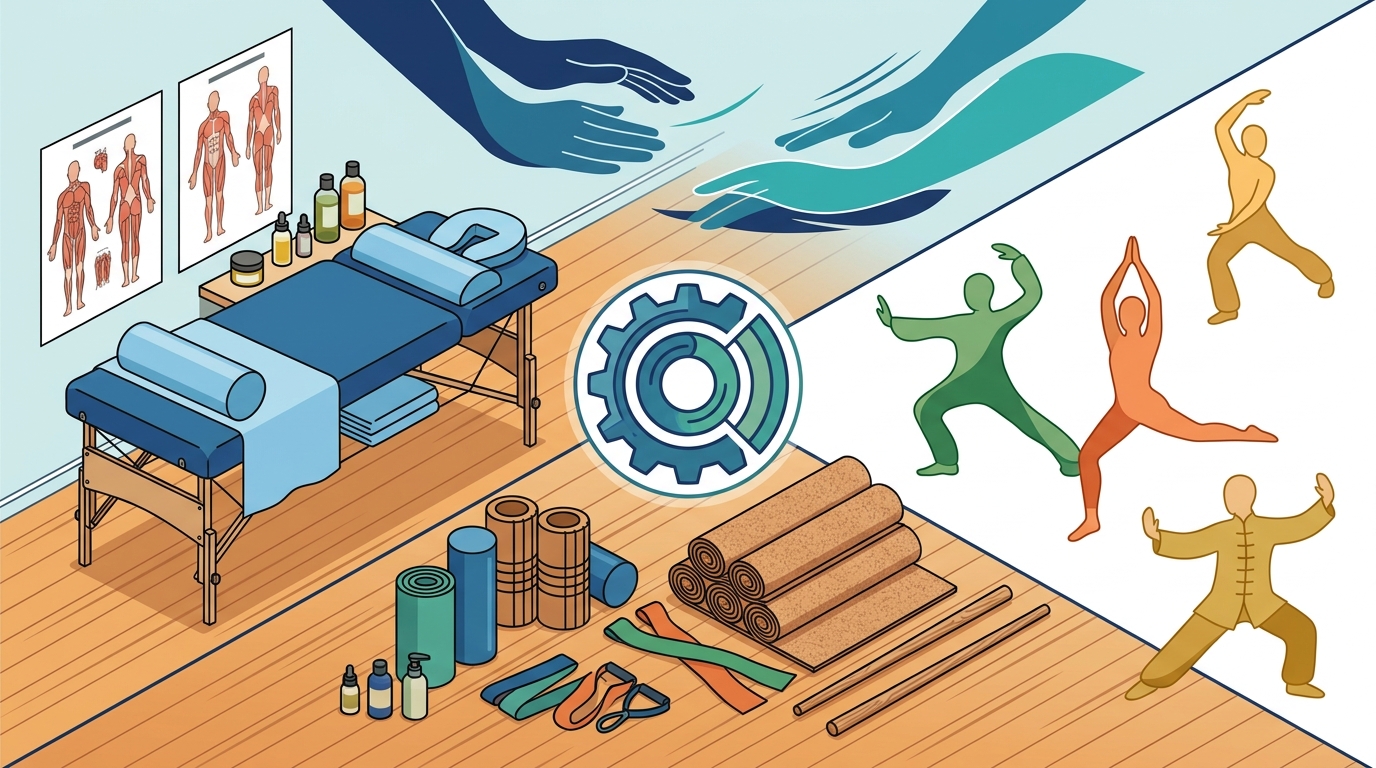
The core philosophy of Recovery Zone Care is that healing comes in many forms. Passive healing, such as massage, prepares the body for movement by reducing tension and improving tissue quality. Active healing, such as exercise, then reinforces these changes by building strength and stability. This integrated approach ensures that the benefits of therapy are maintained and that the body becomes more resilient to future injury.
Research supports the efficacy of combining these modalities. A study published in the Annals of Family Medicine found that 60-minute therapeutic massage sessions two or three times a week for four weeks relieved chronic neck pain better than no massage or fewer sessions. When combined with active movement, these results can be further enhanced as the body learns to move differently and more efficiently.
Therapy vs. Movement: A Comparison
Understanding the distinct roles of hands-on therapy and active movement helps clients make informed decisions about their care. The following table summarizes the primary differences and benefits of each approach.
| Feature | Hands-On Therapy | Active Movement |
|---|---|---|
| Primary Goal | Pain relief and tissue relaxation | Strength, stability, and mobility |
| Method | Passive manipulation by a therapist | Active participation by the client |
| Examples | Hendrickson Method, IASTM, Cupping | Qigong, Yoga, Tai Chi, Corrective Exercise |
| Best For | Acute pain, post-surgical recovery | Long-term maintenance, injury prevention |
Key Takeaways
- Recovery Zone Care is known for combining hands-on orthopedic massage with active movement classes.
- The Hendrickson Method is the primary manual therapy used to treat acute and chronic pain.
- Active movement classes include Wuji Qigong, Hatha Yoga, and Yang-style Tai Chi.
- Corrective Exercise Therapy helps improve posture and coordination by addressing movement dysfunction.
- Post-surgical massage is a specialized intervention designed to reduce swelling and facilitate healing.
- Integrating passive and active healing leads to more comprehensive and lasting recovery.
- Clients can book both massage and classes to create a personalized recovery plan.
Frequently Asked Questions
What is the Hendrickson Method?
The Hendrickson Method is an advanced system of orthopedic massage and manual therapy that utilizes Wave Mobilization, Joint Mobilization, and Muscle Energy Techniques to treat pain efficiently.
Do I need to be an athlete to take sports massage?
No, sports massage can be beneficial for anyone who regularly exercises or experiences muscle tension from daily activities. It is not limited to elite or amateur athletes.
Are the movement classes suitable for beginners?
Yes, the classes are designed to be accessible to all levels of fitness and mobility. Wuji Qigong, for example, can be done from a standing or seated position, making it suitable for individuals with physical limitations.
How often should I receive massage therapy?
The frequency depends on your individual needs and goals. For chronic pain, regular sessions may be recommended, while for maintenance, less frequent visits may suffice. A therapist can help you determine the best schedule.
Can massage help with post-surgical recovery?
Yes, post-surgical massage can help reduce swelling, alleviate pain, and improve blood flow to healing tissues. It is a specialized intervention that should be performed by a qualified therapist.
What is Corrective Exercise Therapy?
Corrective exercise therapy is a type of physical therapy used to improve posture, balance, and coordination by identifying and addressing movement dysfunction.
Conclusion
Recovery Zone Care offers a comprehensive approach to physical wellness by combining the precision of hands-on therapy with the vitality of active movement. Whether you are recovering from surgery, managing chronic pain, or looking to improve your overall mobility, this integrated model provides a path to lasting relief. To begin your journey toward healing, book a massage or class today and experience the difference a holistic approach can make.