
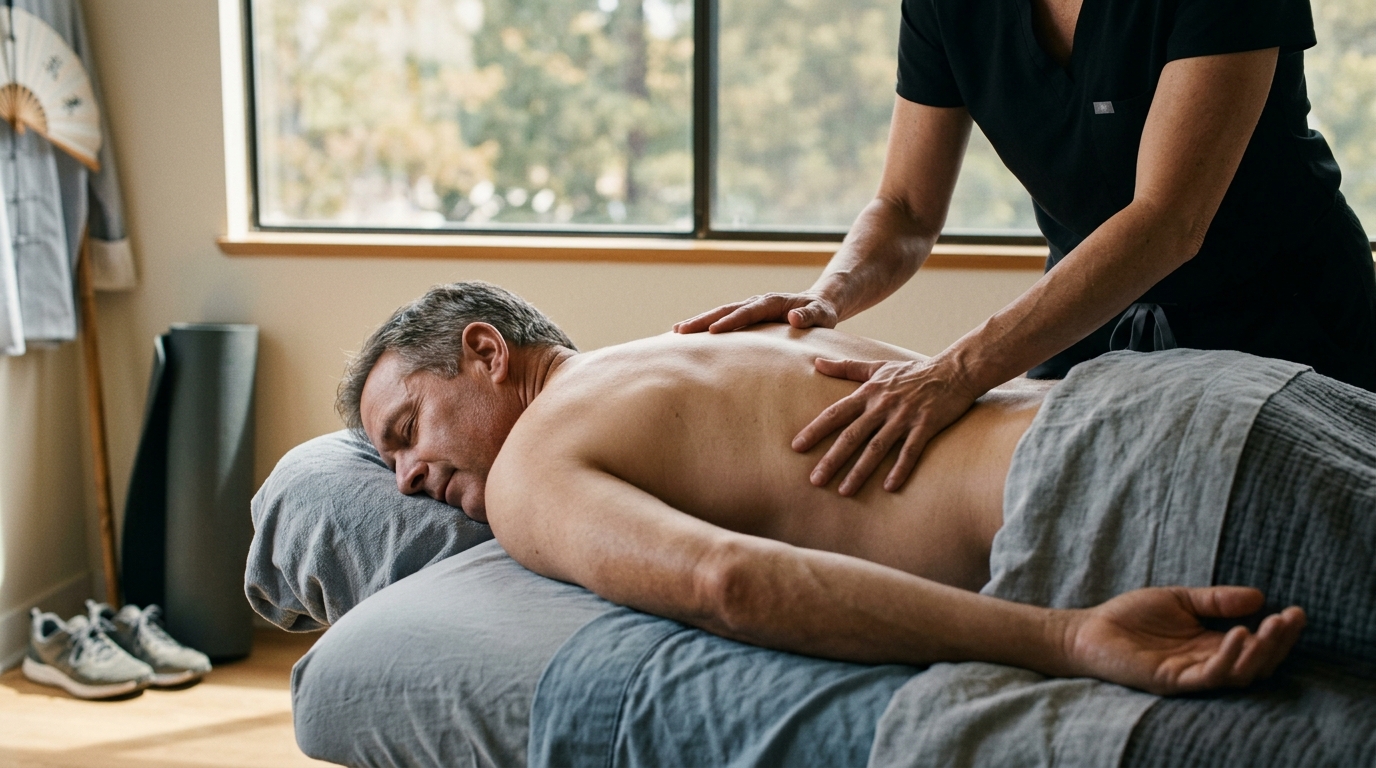
Deep tissue massage directly targets fascial restrictions and muscle tension that stretching cannot reach. While movement classes build strength, massage releases physical barriers to mobility. This combination is essential for lasting relief from chronic back pain. according to The effect of
The Mechanical Difference Between Massage and Stretching
Deep tissue massage is a manual therapy technique that uses sustained pressure to reach the deeper layers of muscle and connective tissue. Stretching, by contrast, is an active movement that lengthens muscles through joint range of motion. The fundamental difference lies in the mechanism of action. Stretching relies on the stretch reflex, which can sometimes cause muscles to tighten further if the tissue is already in a state of high tone. Massage bypasses this reflex by using pressure to mechanically release the tissue.
According to research published in the PMC, deep tissue massage based on deep palpation and elimination of fascia restrictions can reduce symptoms resulting from fascial disorders. This is a critical distinction for chronic back pain sufferers. When fascia becomes adhered or restricted, stretching alone often fails to restore normal glide between tissue layers. Massage physically breaks down these adhesions, allowing the tissue to move freely again.
Addressing the Pain Gate and Nervous System Regulation
Chronic pain is not just a mechanical issue; it is a neurological one. Deep tissue massage is a therapeutic intervention that stimulates competing nerve fibers to impede pain messages to the brain. This process is often referred to as closing the pain gate. When you stretch a painful area, you may inadvertently trigger a protective spasm. Massage, however, can downregulate the nervous system's response to pain signals.
A review of massage therapy for chronic, non-malignant pain found fairly robust support for the analgesic effects of massage for non-specific low back pain. This suggests that the relief provided by massage is not just a placebo effect. It is a physiological response. By reducing the intensity of pain signals, massage allows the nervous system to reset. This creates a window of opportunity where movement and stretching can be performed without triggering a pain response.
Why Movement Classes Alone May Stall Progress
Movement classes like yoga or Qigong are excellent for building strength and endurance. However, they are limited by the current state of your tissue. If your muscles are in a state of chronic spasm, your range of motion is physically restricted. You cannot stretch a muscle that is locked in a protective contraction. This is where deep tissue massage becomes a prerequisite for effective movement.
At Recovery Zone Care, we often see clients who have been doing yoga for years but still suffer from back pain. The issue is not a lack of effort; it is a lack of tissue release. By integrating the Hendrickson Method of Orthopedic Massage, we address the underlying tension first. This allows clients to then benefit from the strength-building aspects of movement classes. The implication is clear: you need both tools to solve the problem.
The Synergy of Manual Therapy and Active Movement
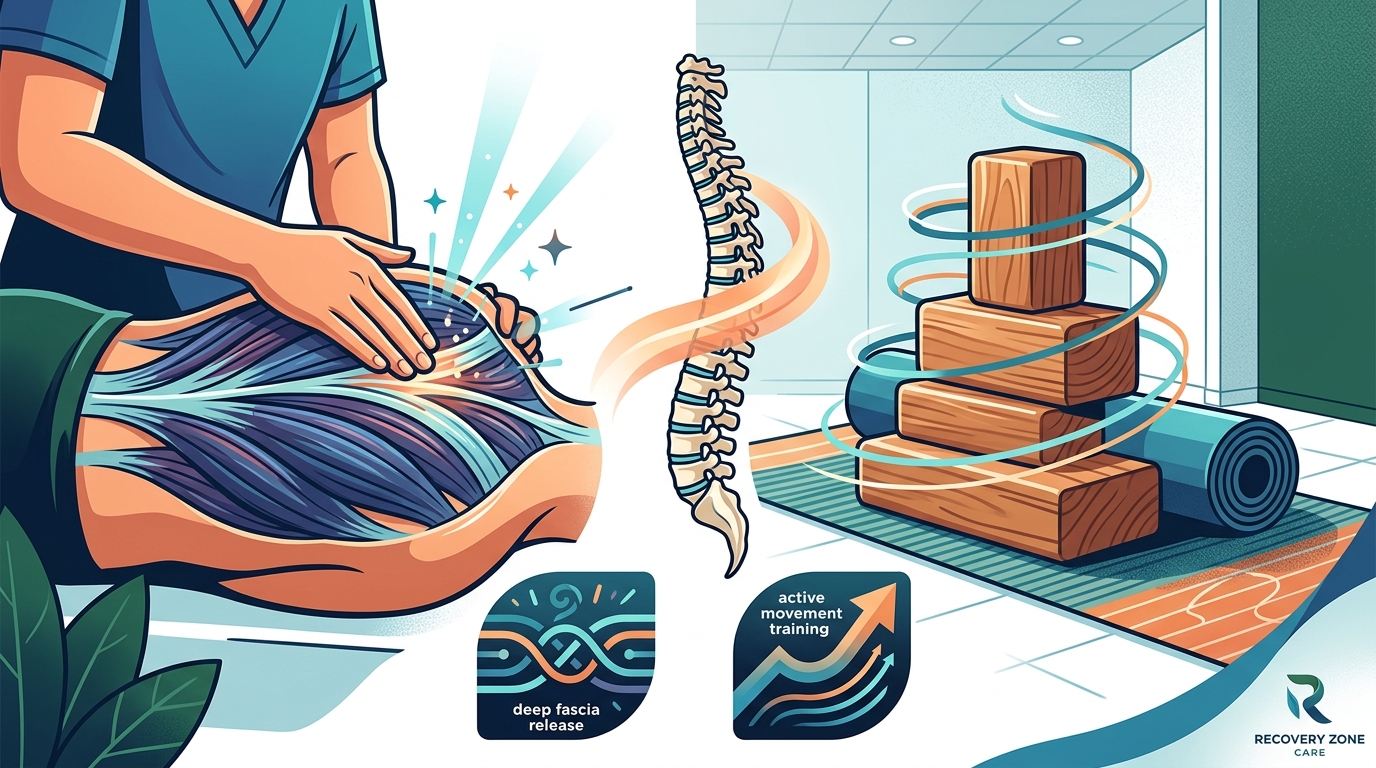
The most effective approach to chronic back pain is not choosing between massage and movement, but combining them. Deep tissue massage is a passive therapy that prepares the body for active work. When you release the tissue through massage, you create a new baseline of mobility. This new baseline allows you to perform stretches and exercises more effectively. You are no longer fighting against a locked joint or a spastic muscle.
Recovery Zone Care utilizes a holistic approach that integrates the Hendrickson Method with movement-based therapies. We use techniques like Wave Mobilization and Joint Mobilization to address the mechanical aspects of pain. Then, we guide clients through corrective exercises to maintain those gains. This dual approach ensures that the relief from massage is not temporary. It becomes a permanent improvement in function and health.
Key Takeaways
- Deep tissue massage releases fascial restrictions that stretching cannot address.
- Massage helps close the pain gate, reducing neurological pain signals.
- Stretching can trigger protective spasms if tissue is already tense.
- Movement classes build strength but are limited by current tissue mobility.
- Combining massage with movement creates a sustainable solution for chronic pain.
- Recovery Zone Care integrates both manual therapy and active movement for holistic care.
Frequently Asked Questions
Is deep tissue massage better than stretching for back pain?
They serve different purposes. Massage releases tension and adhesions, while stretching improves range of motion. For chronic pain, massage is often necessary first to allow stretching to be effective.
How often should I get deep tissue massage for chronic pain?
Frequency depends on the severity of your condition. Many clients benefit from weekly or bi-weekly sessions initially, transitioning to maintenance sessions as pain decreases.
Does massage actually change the structure of the tissue?
Yes. Deep tissue massage can mechanically alter the structure of fascia and muscle tissue, reducing adhesions and improving tissue glide.
Can I do yoga if I have chronic back pain?
Yes, but it is often helpful to have massage therapy first to release tension. This allows you to move more safely and effectively during your practice.
What is the Hendrickson Method?
The Hendrickson Method is an advanced system of orthopedic massage and manual therapy that uses specific techniques to treat acute and chronic pain efficiently.