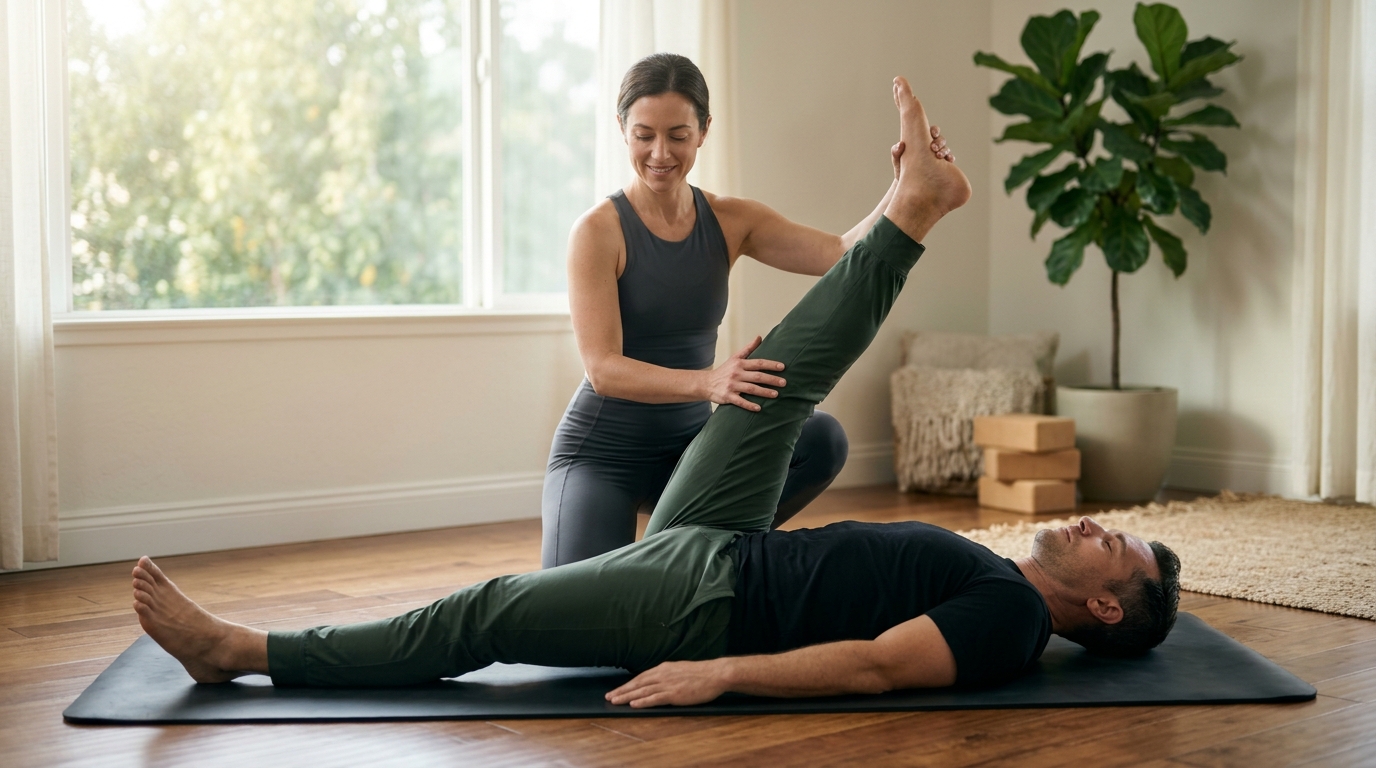
Assisted stretching is a therapeutic technique where a practitioner guides your body through specific movements to safely increase joint mobility. At Recovery Zone Care in San Jose, we use this method to help clients overcome physical restrictions that self-stretching often fails to address. By combining hands-on guidance with active movement, this approach targets deep tissue and joint capsules to restore functional range of motion.
The Physiology of Assisted Stretching
Assisted stretching is a method where a trained professional uses their hands or body weight to guide a client through a stretch. This external force allows the muscles to relax more deeply than they would under voluntary effort alone. The primary goal is to reduce the protective reflexes that limit movement in tight or injured areas.
When you stretch yourself, your nervous system often triggers a stretch reflex to prevent injury. This reflex can limit how far you can go. A practitioner can bypass this by applying gentle, sustained pressure that signals safety to the nervous system. This allows the muscle spindle to relax, enabling a greater range of motion.
Research supports the efficacy of these techniques. A study published in the PMC database examined an eight-week active-assisted stretching program in elderly residents. The study found significant improvements in functionality, mobility, and range of motion. This evidence suggests that guided stretching is not just a comfort measure but a clinical tool for restoring physical capacity.
Improving Joint Range of Motion
Range of motion (ROM) is the degree of movement possible at a joint. Assisted stretching directly targets the connective tissues and joint capsules that restrict this movement. Unlike simple stretching, which may only lengthen the muscle belly, assisted techniques can address the fascia and ligaments surrounding the joint.
For many clients, the limitation is not muscle tightness but joint restriction. A practitioner can use specific mobilization techniques to free up the joint surface. This is particularly useful for areas like the hips, shoulders, and spine, where complex joint structures limit movement. By addressing these restrictions, you can perform daily tasks with less pain and effort.
At Recovery Zone Care, we integrate assisted stretching into our manual therapy sessions. This ensures that the gains made during the session are supported by the surrounding soft tissue. The result is a more stable and functional joint, not just a temporary increase in flexibility.
Long-Term Flexibility Gains
Flexibility is the ability of a muscle or group of muscles to lengthen. Assisted stretching promotes long-term flexibility by changing the resting length of the muscle and fascia. This is different from acute stretching, which provides temporary relief. Chronic, consistent assisted stretching leads to structural changes in the tissue.
A systematic review in the PMC database analyzed the mechanisms underlying range of motion improvements following static stretching. The review highlighted that both acute and chronic stretching can improve ROM, but the mechanisms differ. Chronic stretching leads to changes in the viscoelastic properties of the tissue. This means the tissue becomes more extensible over time.
For clients at Recovery Zone Care, this means that regular sessions can lead to lasting improvements in posture and movement quality. We often pair assisted stretching with corrective exercise to ensure the new range of motion is maintained. This holistic approach prevents the body from reverting to old, restricted patterns.
Assisted vs. Self-Stretching
Self-stretching is a valuable tool for daily maintenance, but it has limitations. Most people lack the proprioceptive awareness or strength to stretch deeply and safely. Assisted stretching provides the external force and feedback needed to reach deeper levels of tissue relaxation. This makes it more effective for addressing chronic restrictions.
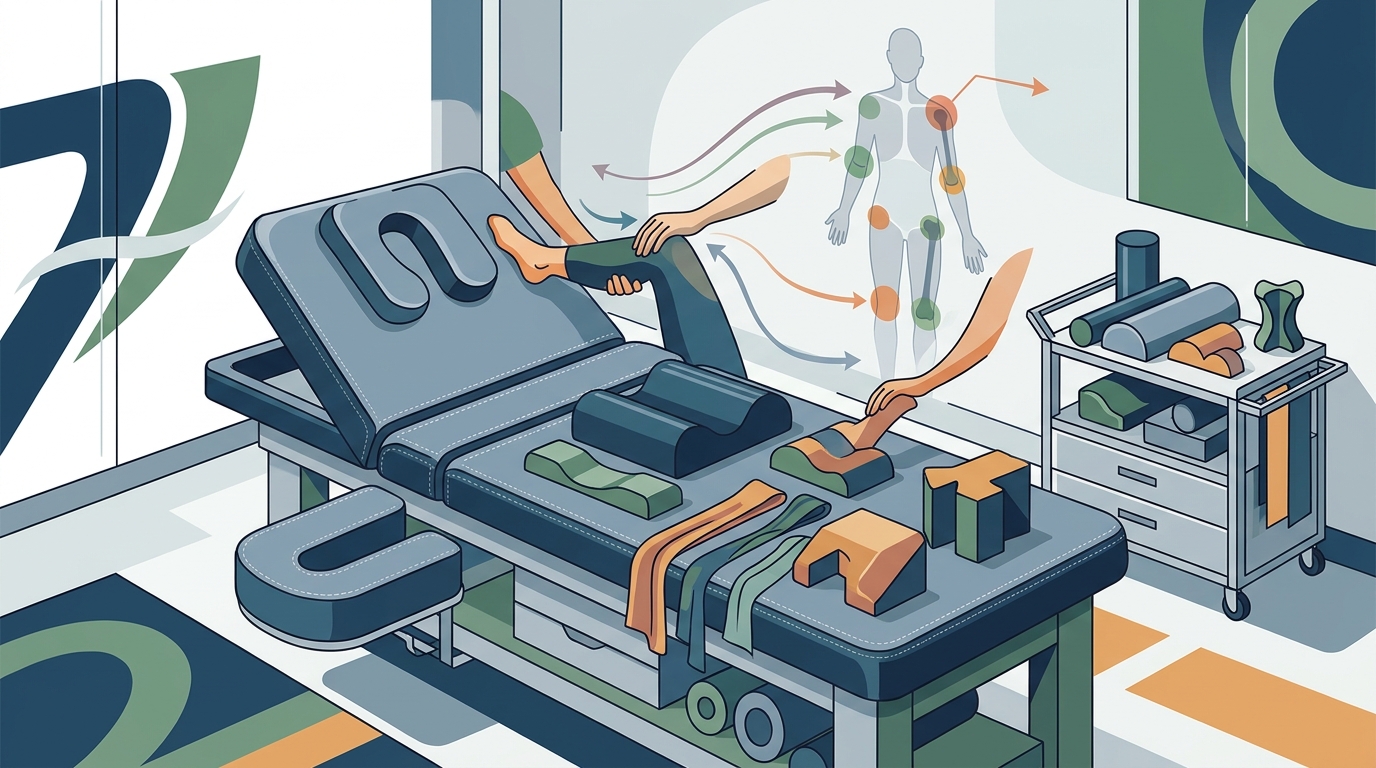
However, assisted stretching is not a replacement for active movement. It is a complement to it. At Recovery Zone Care, we teach clients how to integrate the principles of assisted stretching into their own routines. This includes using tools like fitness gear to maintain the gains made in session. The goal is to empower you to manage your own mobility.
One key difference is the ability to target specific areas. A practitioner can isolate a single muscle or joint, which is difficult to do alone. This precision allows for more efficient treatment of specific pain points. For example, if you have a tight hip flexor, a practitioner can guide you into a position that maximally stretches that specific area without compensating with other muscles.
Integrating Assisted Stretching at Recovery Zone Care
At Recovery Zone Care, we view assisted stretching as a core component of our therapeutic approach. We do not offer it in isolation. Instead, we integrate it with our Hendrickson Method orthopedic massage and manual therapy. This combination ensures that both the soft tissue and the joint are addressed.
We also offer movement-based therapies like Wuji Qigong and Taiji Quan. These practices help you maintain the range of motion gained through assisted stretching. The gentle, flowing movements of Qigong are ideal for reinforcing the new mobility patterns. This creates a sustainable cycle of healing and maintenance.
Our location in San Jose provides easy access to these services. We work with clients of all ages and activity levels. Whether you are an athlete looking to improve performance or an older adult seeking to maintain independence, assisted stretching can be a valuable part of your wellness plan. Our goal is to help you move freely and pain-free.
Key Takeaways
- Assisted stretching uses external force to bypass nervous system reflexes, allowing for deeper tissue relaxation.
- It is particularly effective for improving joint range of motion in complex areas like the hips and shoulders.
- Research supports the use of assisted stretching for improving functionality and mobility in various populations. according to The effects of
- Long-term flexibility gains require consistent practice and structural changes in the tissue.
- Assisted stretching is most effective when combined with active movement and corrective exercise.
- At Recovery Zone Care, we integrate assisted stretching with manual therapy and movement classes for holistic results.
Frequently Asked Questions
Is assisted stretching safe for everyone?
Assisted stretching is generally safe when performed by a trained professional. However, it is important to inform your practitioner of any injuries or medical conditions. At Recovery Zone Care, we conduct a thorough assessment before beginning any treatment plan.
How many sessions are needed to see results?
Results vary depending on the individual and the specific restriction. Some clients notice immediate relief, while others may need several sessions to see significant changes in range of motion. Consistency is key to achieving long-term flexibility gains.
Does assisted stretching hurt?
It should not be painful. You may feel a deep stretch or tension, but sharp pain is a sign to stop. A good practitioner will work within your comfort zone, gradually increasing the intensity as your body adapts.
Can I do assisted stretching at home?
You can use tools like foam rollers or resistance bands to mimic some aspects of assisted stretching. However, you cannot replicate the precise manual guidance and feedback provided by a professional. For best results, combine home exercises with professional sessions.
How is assisted stretching different from yoga?
Yoga is a practice that includes stretching, but it also involves breathwork, meditation, and philosophy. Assisted stretching is a specific therapeutic technique focused on increasing range of motion. At Recovery Zone Care, we offer both yoga classes and assisted stretching as part of our holistic approach.