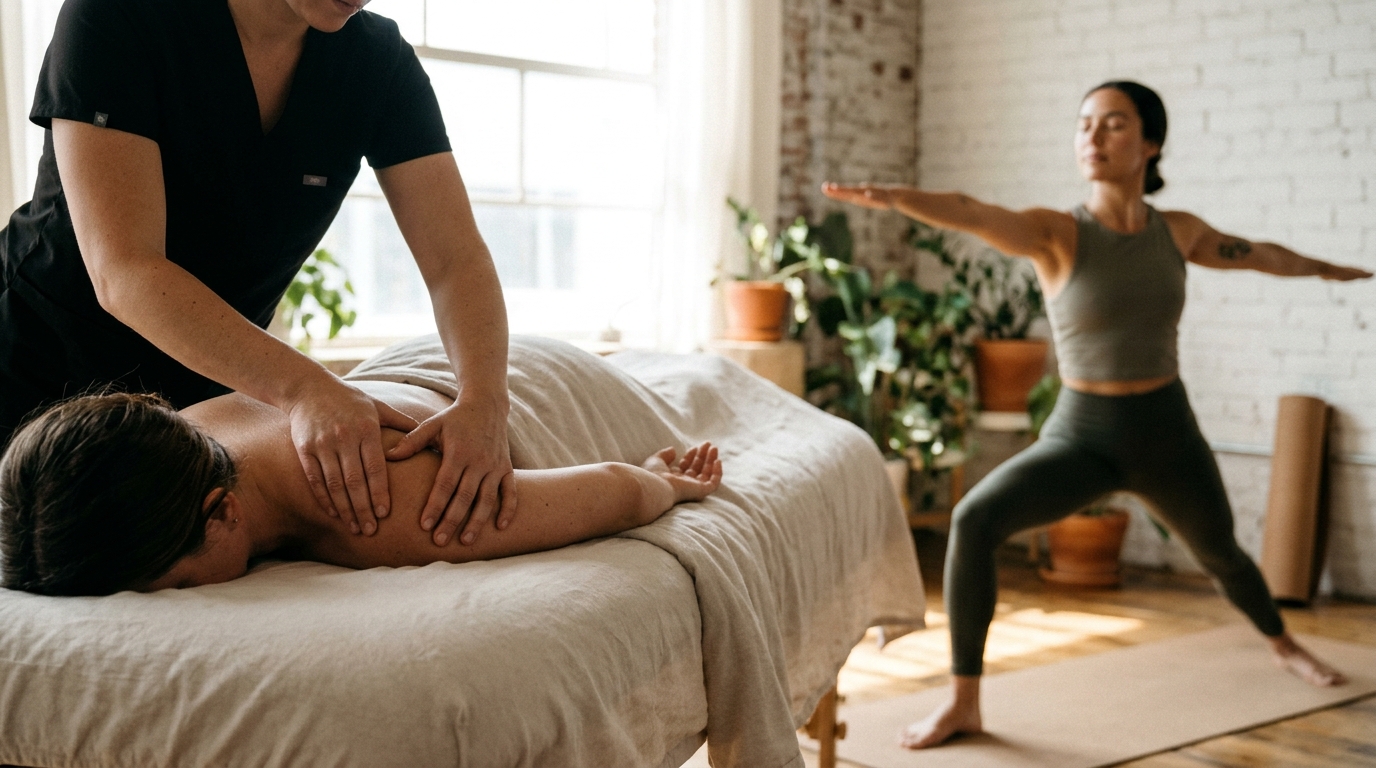
Combining massage therapy with yoga relieves muscle tension by addressing both the physical structure of the muscle and the neurological patterns that sustain tightness. Massage therapy is a hands-on technique that manipulates soft tissue to reduce physical knots and improve blood flow. Yoga is a mind-body practice that uses controlled movement and breath to retrain the nervous system and restore range of motion. At Recovery Zone Care in San Jose, we integrate these two modalities to create a comprehensive approach to pain relief and mobility.
The Physiological Mechanisms of Tension Relief
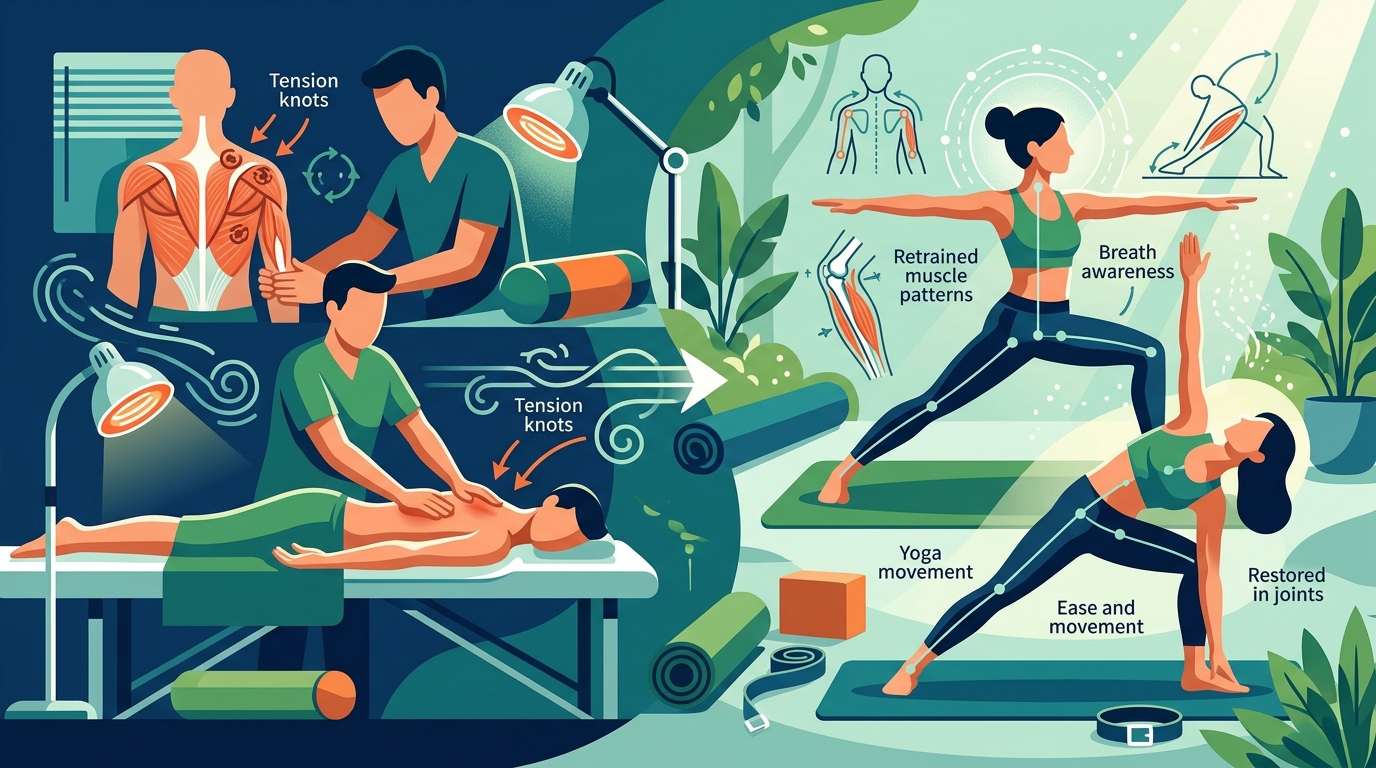
Muscle tension often persists because the body perceives a threat, causing muscles to contract and stay contracted. Massage therapy works by mechanically breaking down adhesions in the fascia, the connective tissue surrounding muscles. This physical manipulation increases local blood flow and oxygen delivery to the tissue. Research indicates that massage can increase skin and muscle temperature, which helps relax tight fibers. A systematic review published in the Journal of Bodywork and Movement Therapies found that massage alleviates delayed onset muscle soreness by improving blood and lymphatic flow.
Yoga complements this by engaging the parasympathetic nervous system, often called the rest and digest mode. When you hold a yoga pose, you are not just stretching; you are signaling safety to your brain. This reduces the stress hormones that contribute to chronic tension. The combination of passive release from massage and active engagement from yoga creates a feedback loop where the muscle learns to relax more easily over time.
Neurological Reprogramming and Pain Gating
Chronic tension is often a neurological habit as much as a physical one. The concept of pain gating suggests that stimulating non-painful nerve fibers can block pain signals from reaching the brain. Massage provides this stimulation through pressure and movement. Yoga adds the element of mindful awareness, helping practitioners observe sensations without reacting with further tension. This dual approach helps rewire the brain's response to discomfort.
At Recovery Zone Care, we utilize the Hendrickson Method, which integrates manual therapy with an understanding of how the body moves. This method focuses on joint mobilization and muscle energy techniques that address the root cause of tension rather than just the symptom. By combining this with movement-based therapies like Qigong and Tai Chi, we help clients develop a deeper awareness of their body's mechanics. This neurological reprogramming is essential for long-term relief, as it prevents the tension from returning once the immediate treatment is over.
The Synergy of Passive and Active Recovery
Passive recovery, such as massage, is excellent for immediate relief but does not always build the strength needed to maintain that relief. Active recovery, such as yoga, builds the stability and flexibility required to keep muscles healthy. When used together, they create a synergistic effect. For example, a client might receive a deep tissue massage to release a tight hip flexor. The following day, they attend a yoga class to gently stretch and strengthen that area. This sequence ensures that the muscle remains open and functional.
Our exercise classes are designed to be accessible to all levels of fitness and mobility. We offer Hatha Yoga, Wuji Qigong, and Yang-style Tai Chi, which are ideal for integrating with massage therapy. These practices focus on slow, controlled movements that enhance joint mobility and muscle flexibility. The slow pace of these classes allows the nervous system to settle, reinforcing the relaxation achieved during massage sessions. This synergy is why many clients report that their tension does not return as quickly when they combine both therapies.
Implementing a Combined Protocol
Implementing a combined protocol requires consistency and a clear understanding of your body's needs. It is not about doing more, but about doing the right things in the right order. A typical week might include one or two massage sessions to address specific areas of pain, followed by two or three movement classes to maintain mobility. This balance prevents overtraining while ensuring that the benefits of the massage are preserved. Clients at Recovery Zone Care often find that this structured approach leads to faster and more lasting results than either therapy alone.
It is also important to listen to your body. If a yoga pose causes sharp pain, it is a signal to stop or modify the movement. Massage therapists can provide specific exercises to complement the treatment, ensuring that you are moving safely. We provide clients with personalized plans that include specific exercises and movement practices. This individualized approach ensures that the combination of massage and yoga is tailored to your unique recovery needs. By following a consistent protocol, you can break the cycle of tension and pain.
Key Takeaways
- Mechanical Release: Massage physically breaks down fascial adhesions and improves blood flow to tight muscles.
- Neurological Calm: Yoga activates the parasympathetic nervous system, reducing the stress response that sustains tension.
- Pain Gating: The stimulation from massage and the awareness from yoga work together to block pain signals.
- Active Maintenance: Yoga builds the strength and flexibility needed to maintain the relief provided by massage.
- Personalized Care: A combined protocol tailored to your specific needs leads to faster and more lasting results.
- Consistency is Key: Regular practice of both modalities is essential for long-term tension relief.
Frequently Asked Questions
How often should I combine massage and yoga?
For most people, one or two massage sessions per week combined with two to three yoga classes is an effective starting point. Adjust based on your body's response and the severity of your tension. according to Massage as a
Can yoga replace massage for tension relief?
Yoga is excellent for maintaining mobility and reducing stress, but it may not be sufficient for breaking up deep, chronic adhesions. Massage provides the mechanical release that yoga alone cannot always achieve.
Which type of yoga is best for muscle tension?
Gentle styles like Hatha Yoga, Qigong, and Tai Chi are ideal for tension relief. These practices focus on slow, controlled movements and breath, which help calm the nervous system.
Does the order of massage and yoga matter?
Yes, generally it is best to have massage first to release the tension, followed by yoga to maintain the new range of motion. This sequence helps the muscle learn to stay relaxed.
Is this approach safe for people with chronic pain?
Yes, when guided by a qualified professional. At Recovery Zone Care, we tailor the intensity of both massage and movement to ensure safety and comfort for clients with chronic conditions.
Start Your Recovery Journey
Relieving muscle tension requires a holistic approach that addresses both the physical and neurological aspects of pain. By combining the mechanical release of massage with the active, mindful practice of yoga, you can create a sustainable path to relief. At Recovery Zone Care, we are dedicated to helping you find meaningful recovery and healing. Our team in San Jose offers personalized treatment plans that integrate these powerful modalities. To begin your journey, book a massage or join one of our movement classes today.