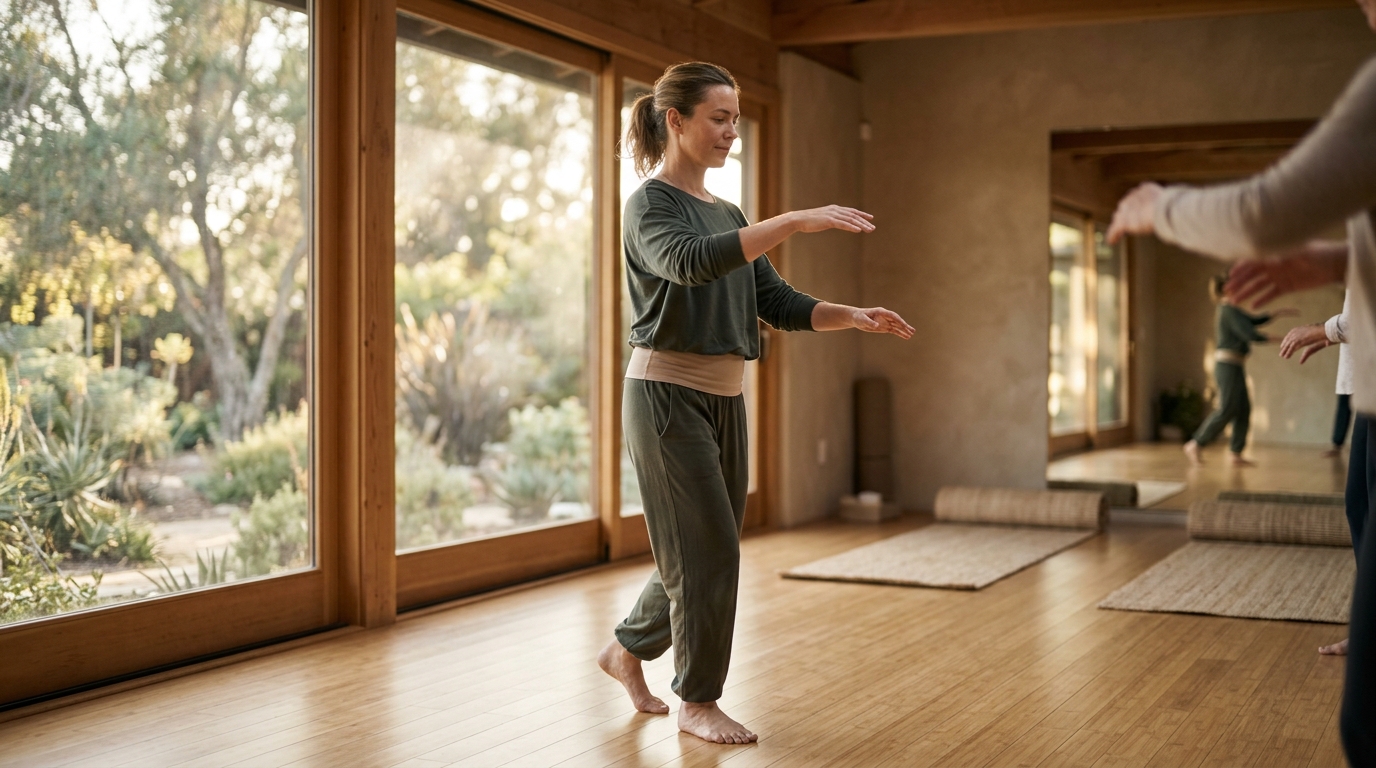
Qigong is a traditional Chinese practice combining slow, intentional movements with coordinated breathing and focused attention. For recovery, it offers a gentle, low-impact way to restore mobility and reduce stress without straining healing tissues. At Recovery Zone Care in San Jose, we integrate these principles to help clients rebuild strength and confidence safely.
What Is Qigong and Why It Works for Recovery
For individuals in recovery, the slow pace of qigong is a critical feature. Unlike high-intensity workouts, qigong movements are soft and controlled, allowing the body to move through its full range of motion without triggering pain responses. This approach is particularly beneficial for those recovering from surgery or chronic pain, as it prioritizes active relaxation and focused attention over physical exertion.
The Four Core Components of Qigong Practice
Effective qigong practice relies on four essential components: physical training, active relaxation, focused attention, and conscious breathing. According to a study on individual stress prevention through qigong, these elements are vital for recovery from physiological and psychological overactivation. Physical training in qigong involves slow, controlled movements at a moderate aerobic level, which helps maintain joint health without high impact.
How to Start Your Qigong Journey Safely
When starting qigong, it is crucial to begin with simple, foundational movements. Novice practitioners can start by learning the physical movements of common forms, which typically take about eight to 12 minutes to complete. A resource from the National Institutes of Health suggests that beginners should focus on the sequences of isometric and isotonic segmental movements in the upper and lower extremities before incorporating complex breathing techniques. This gradual progression ensures that the body adapts safely to the new movement patterns.
At Recovery Zone Care, we offer Wuji Qigong classes designed for all levels of fitness and mobility. These classes are accessible to everyone, regardless of physical limitations, and can be performed from a standing or seated position. For those with limited mobility, chairs are provided, and endless variations of the exercises allow for individualized practice. Starting with a fundamentals class helps build a strong foundation of correct posture and movement mechanics, which is essential for preventing injury and maximizing benefits.
Specific Benefits for Physical and Mental Recovery
Qigong offers specific benefits for both physical and mental recovery, making it a valuable tool for holistic healing. For physical recovery, the slow movements help improve joint mobility, muscle flexibility, and strength. A systematic review and meta-analysis found that qigong exercise can positively impact the physical and mental health of individuals, including improvements in cognitive function and reduction of oxidative stress. The BMC Complementary Medicine and Therapies study highlights these broad health benefits, demonstrating the practice's efficacy in various populations.
Mentally, qigong helps regulate mood and reduce anxiety. The practice of focusing on breath and movement acts as a form of moving meditation, which can lower stress levels and improve emotional regulation. For those dealing with chronic pain or post-surgical stress, this mental clarity is often as important as the physical gains. By addressing both the body and the mind, qigong provides a comprehensive approach to recovery that supports overall well-being and resilience.
Finding the Right Qigong Class in San Jose
Choosing the right class is essential for a successful qigong practice. In San Jose, Recovery Zone Care provides specialized qigong instruction that integrates modern therapeutic insights with traditional techniques. Our classes are designed to be inclusive, accommodating all levels of ability and age. We offer both in-person and online options, allowing you to practice in a comfortable environment that suits your recovery needs. The flexibility of our schedule, including morning classes, makes it easy to incorporate qigong into your daily routine.
When selecting a qigong instructor, look for someone who emphasizes safety, proper alignment, and individualized attention. A qualified teacher will guide you through the movements with clear explanations of their purpose and benefits. At Recovery Zone Care, our instructor is certified in Wuji Qigong and other movement-based therapies, ensuring that you receive high-quality, evidence-informed instruction. This expertise helps you avoid common mistakes and get the most out of your practice, supporting your unique recovery goals.
Key Takeaways
- Qigong is a mind-body practice that coordinates body, breath, and mind to activate natural healing mechanisms.
- The four core components of qigong are physical training, active relaxation, focused attention, and conscious breathing.
- Slow, controlled movements make qigong ideal for low-impact recovery from injury or surgery.
- Beginners should start with simple forms and gradually incorporate breathing techniques to ensure safety.
- Qigong offers both physical benefits, such as improved mobility, and mental benefits, such as reduced stress.
- Recovery Zone Care in San Jose offers accessible qigong classes for all levels, including seated options.
Frequently Asked Questions
Is qigong suitable for beginners with no prior exercise experience?
Yes, qigong is highly suitable for beginners. The movements are slow and gentle, and many exercises can be modified for seated practice. This makes it an excellent entry point for those new to movement-based therapies or those with limited mobility.
How long does it take to see benefits from qigong?
Many practitioners report feeling a sense of relaxation and improved mood after their first session. Physical benefits, such as increased flexibility and reduced pain, may take several weeks of consistent practice to become noticeable. Regularity is key to achieving long-term results.
Can I do qigong if I have chronic pain?
Yes, qigong is often recommended for chronic pain management. The gentle nature of the movements helps to reduce tension and improve circulation without aggravating painful areas. It is important to work with a qualified instructor who can tailor the practice to your specific condition.
What is the difference between qigong and tai chi?
Both qigong and tai chi are traditional Chinese mind-body practices. Tai chi is often more martial-arts oriented and involves complex sequences of movements, while qigong focuses more on health cultivation and can be simpler and more static. They share many principles and can be practiced together.
Do I need special equipment to practice qigong?
No, qigong requires no special equipment. You only need comfortable clothing and a quiet space where you can move freely. Some classes may use chairs for support, but no props are necessary for the basic movements.
How often should I practice qigong for recovery?
For recovery, practicing qigong daily or several times a week is ideal. Even short sessions of 10 to 15 minutes can be beneficial. Consistency is more important than duration when building a sustainable practice.
Start Your Recovery Journey Today
Starting qigong is a powerful step toward holistic recovery. By embracing slow, mindful movements, you can support your body's natural healing processes and improve your overall well-being. At Recovery Zone Care, we are dedicated to helping you find meaningful recovery and healing through our specialized qigong classes and therapeutic services. Whether you are recovering from an injury, managing chronic pain, or simply seeking a calmer way to move, our team is here to guide you. Book a class with us today and begin your journey toward better health and mobility.