
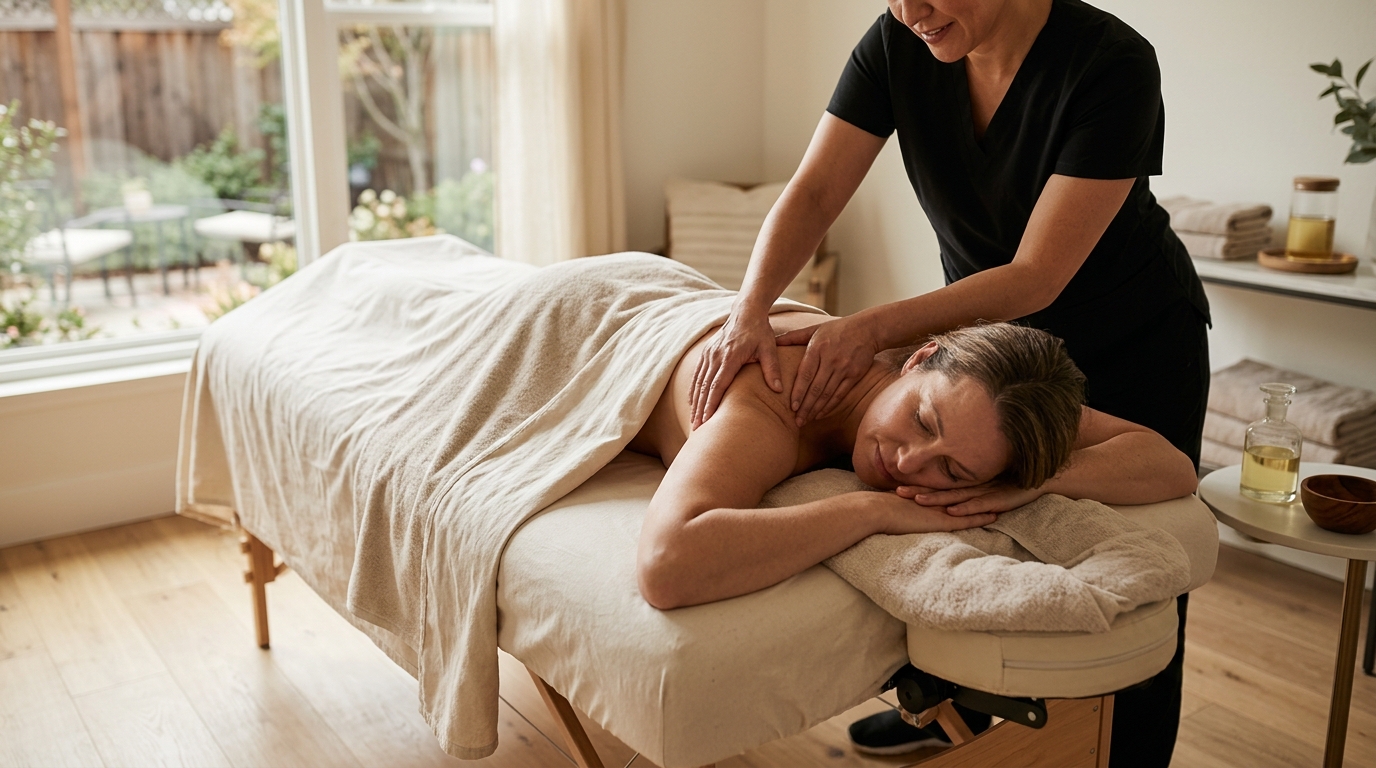
For persistent joint stiffness, most individuals benefit from scheduling therapeutic massage every two to four weeks. This frequency allows the body to retain the benefits of manual therapy while providing enough time for tissues to adapt and heal. Recovery Zone Care in San Jose uses this evidence-based rhythm to help clients manage chronic discomfort. This guide covers the science behind tissue adaptation, the role of complementary movement therapies, and how to build a sustainable recovery plan.
Understanding Joint Stiffness and Tissue Adaptation
Persistent joint stiffness is a condition where the range of motion in a joint is restricted due to the tightening of surrounding muscles, tendons, and fascia. This restriction often results from a protective response by the body to previous injury or chronic inflammation. When tissues remain in a shortened state for too long, they lose their elasticity, making movement painful and difficult.
Massage therapy addresses this by mechanically manipulating the soft tissue to restore length and pliability. The body requires time to integrate these changes. If sessions are too frequent, the tissue may remain in a state of constant irritation. If they are too infrequent, the stiffness returns before the therapeutic benefits are fully realized. Understanding this balance is the first step in creating an effective treatment schedule.
Determining Your Ideal Massage Frequency
The optimal schedule depends on the severity of the stiffness and the individual's response to treatment. For most people dealing with chronic, persistent stiffness, a bi-weekly schedule is a strong starting point. This allows for consistent intervention without overwhelming the body's healing mechanisms.
Acute vs. Chronic Stiffness
Acute stiffness, which develops suddenly due to a new injury, may require more frequent sessions initially. However, as the condition becomes chronic, the frequency typically decreases. A therapist will monitor your progress and adjust the schedule accordingly. The goal is to move from a reactive treatment model to a proactive maintenance model.
Signs You Need to Adjust
Pay attention to how your body feels between sessions. If you feel significantly better for only two days before the stiffness returns, you may need to increase the frequency. Conversely, if you feel good for three weeks, you might be able to extend the interval. This feedback loop is essential for long-term success.
| Stiffness Level | Recommended Frequency | Primary Goal |
|---|---|---|
| Acute / High Pain | Weekly | Pain reduction and inflammation control |
| Chronic / Moderate Stiffness | Every 2 weeks | Restoring range of motion and tissue elasticity |
| Maintenance / Low Stiffness | Every 4-6 weeks | Preventing recurrence and maintaining mobility |

The Complementary Treatment Approach
Massage therapy is highly effective, but it is rarely a standalone solution for persistent joint issues. A comprehensive recovery plan integrates manual therapy with active movement practices. At Recovery Zone Care, we emphasize that healing comes in many forms. Combining hands-on work with movement-based therapy creates a synergistic effect that accelerates recovery.
Why Movement Matters
Massage relaxes the tissue, but movement strengthens it. Without strengthening the muscles that support the joint, the stiffness is likely to return. Movement-based therapies help the body learn new, more efficient movement patterns. This prevents the joint from reverting to its old, restricted state.
Integrating Qigong and Yoga
Practices like Wuji Qigong and Hatha Yoga are ideal complements to massage. These disciplines focus on slow, controlled movements that improve joint lubrication and muscle coordination. They also promote mindfulness, which helps reduce the stress response that often exacerbates pain. By pairing a massage session with a movement class, you address both the physical restriction and the neurological patterns of pain.
Techniques for Deep Tissue Relief
Not all massage techniques are created equal when it comes to joint stiffness. The Hendrickson Method is an advanced system of orthopedic massage and manual therapy that is specifically designed to treat sub-acute, acute, and chronic pain. It utilizes Wave Mobilization massage techniques, Joint Mobilization dynamic movements, and Muscle Energy Techniques.
These techniques are effective because they target the specific structures causing the stiffness. Unlike traditional deep tissue massage, which can be painful, the Hendrickson Method provides deep, soothing relief. It promotes optimum health for patients of all ages by addressing the root cause of the restriction rather than just the symptom.
Functional Movement Therapy
For those with complex movement issues, Functional Movement Therapy is an extension of the orthopedic program. It is a revolutionary way of thinking about how we move and how we injure. By integrating innovative mobility and stability strategies, this approach helps clients optimize their efficiency in daily tasks. It is particularly effective for resolving back pain and sciatica.
Building a Home Care Routine
The time between massage sessions is just as important as the sessions themselves. A consistent home care routine helps maintain the gains made during therapy. This routine should include gentle stretching, self-massage, and specific corrective exercises.
Self-Massage and Tools
Using tools like foam rollers or flossing bands can help maintain tissue pliability. These tools allow you to apply pressure to large muscle groups that a therapist might target during a session. Consistency is key; even ten minutes of daily self-care can make a significant difference in how you feel the following week.
Corrective Exercises
Corrective exercise therapy is a type of physical therapy used to improve posture, balance, and coordination. It involves a systematic process of identifying movement dysfunction and implementing an integrated corrective strategy. By performing these exercises at home, you take an active role in your own recovery. This empowers you to manage your stiffness independently.
Key Takeaways
- For persistent joint stiffness, a bi-weekly massage schedule is often the most effective starting point.
- Massage therapy works best when combined with active movement practices like Qigong or Yoga.
- The Hendrickson Method offers a specialized approach to treating chronic pain without excessive discomfort.
- Home care routines, including self-massage and corrective exercises, are essential for maintaining results.
- Frequency should be adjusted based on how long the relief lasts between sessions.
- Functional Movement Therapy helps retrain the body to move efficiently and prevent future injuries.
- A holistic approach that addresses both physical and mental aspects of pain leads to better long-term outcomes.
Frequently Asked Questions
How long does it take to see results from massage for joint stiffness?
Most clients experience immediate relief after a session. However, significant improvements in range of motion and long-term stiffness reduction typically take four to six weeks of consistent treatment.
Is massage therapy safe for people with arthritis?
Yes, when performed by a qualified therapist. Gentle techniques like the Hendrickson Method are often well-tolerated by individuals with arthritis and can help reduce pain and improve mobility.
Can I do Qigong if I have limited mobility?
Absolutely. Wuji Qigong exercises can be performed from a standing or seated position. Chairs are often provided in classes to accommodate students with mobility limitations.
How is the Hendrickson Method different from deep tissue massage?
The Hendrickson Method uses specific mobilization and energy techniques to treat pain efficiently. It is generally more relaxing and less painful than traditional deep tissue massage while still achieving deep tissue relief.
Do I need a prescription for massage therapy?
No, a prescription is not required to book a massage session. However, if you have a specific medical condition, it is always a good idea to consult with your primary care physician.
How often should I attend movement classes?
Attending one or two classes per week is a good starting point. This frequency allows you to build consistency and skill without overexerting yourself.
Conclusion
Managing persistent joint stiffness requires a consistent and holistic strategy. By scheduling massage therapy every two to four weeks and integrating complementary movement practices, you can achieve lasting relief. Recovery Zone Care provides the expertise and tools you need to navigate this process. We combine the precision of the Hendrickson Method with the accessibility of Qigong and Yoga to support your unique recovery needs. To begin your journey toward better mobility and less pain, book a massage or class today.