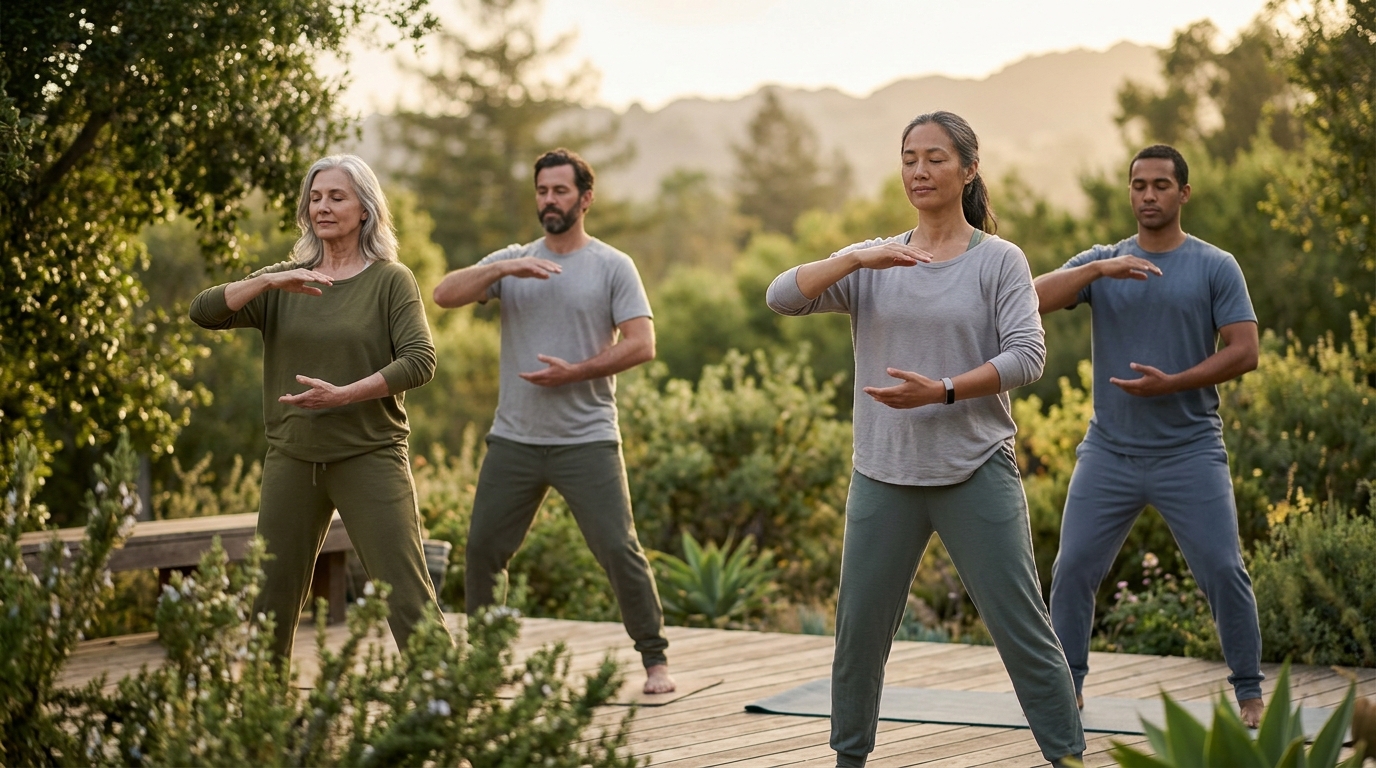
Yes, Qigong classes are available for clients seeking gentle movement recovery. Recovery Zone Care offers accessible, low-impact Qigong sessions designed to restore mobility and reduce pain without straining the body. This guide covers class availability, scheduling, and the specific physiological benefits of gentle movement for healing.
Qigong Class Availability
Recovery Zone Care provides structured Qigong instruction for clients in San Jose and online. The primary offering is the Wuji Qigong class, which focuses on simple, easy-to-learn exercises and movement patterns. These classes are designed to be accessible to all levels of fitness and mobility, including individuals with significant physical limitations.
Online and In-Person Options
Clients can participate in Qigong classes through two distinct formats. The first is an in-person setting at the San Jose location, where chairs are provided for those who prefer seated practice. The second is an online format utilizing Zoom, which allows clients to practice from home. This dual availability ensures that recovery is not interrupted by travel difficulties or weather conditions.
Schedule and Pricing Structure
The current schedule for online Qigong Fundamentals classes runs on Mondays and Wednesdays from 8:30am to 9:30am. Pricing is structured to encourage consistency, which is critical for long-term recovery. A single group class costs $10. For those seeking regular practice, a monthly subscription for one class per week is available for $20. A full monthly pass covering all Monday and Wednesday classes is priced at $40. This tiered pricing model supports clients who need daily movement without the financial burden of high-frequency gym memberships.
Class Levels and Progression
Recovery Zone Care offers two distinct levels of Qigong instruction. The Fundamentals class is an entry-level option suitable for everyone, regardless of prior experience. It focuses on the basic movements that help melt away stress and open joints. The Progressions class is more advanced, building on previously learned movements to expand knowledge of new movement patterns and energetic awareness. Clients typically begin with Fundamentals to establish a safe foundation before advancing.

Gentle Movement Benefits
Gentle movement is a cornerstone of effective physical recovery. Unlike high-intensity training, gentle movement prioritizes joint health, circulation, and nervous system regulation. This approach is particularly effective for individuals managing acute or chronic pain, as it avoids the inflammatory response often triggered by aggressive exercise.
Joint Mobility and Pain Reduction
Qigong exercises are specifically designed to improve joint mobility and muscle flexibility. By moving through a full range of motion in a slow, controlled manner, clients can reduce stiffness and pain. The movements help lubricate joints and strengthen the supporting musculature without placing excessive load on the spine or extremities. This is crucial for clients recovering from surgery or dealing with conditions like arthritis.
Stress Regulation and Nervous System Health
Pain and stress are deeply interconnected. Chronic pain often leads to a state of heightened alertness, which can exacerbate muscle tension and discomfort. Qigong incorporates breathing techniques and slow movement that activate the parasympathetic nervous system. This helps lower cortisol levels and reduces the perception of pain. Clients often report feeling a sense of calm and ease after a session, which supports overall healing.
Accessibility for All Abilities
One of the primary benefits of Qigong is its adaptability. The exercises can be performed from a standing or seated position. This makes it an ideal recovery tool for individuals who cannot stand for long periods or who have balance issues. The endless number of variations ensures that every student can find a way to practice that feels safe and effective. This inclusivity is a key differentiator for Recovery Zone Care, ensuring that no one is excluded from the healing process due to their current physical state.
| Feature | Wuji Qigong Fundamentals | Wuji Qigong Progressions |
|---|---|---|
| Target Audience | Beginners, all mobility levels | Intermediate to Advanced students |
| Primary Focus | Basic movements, stress relief, joint opening | Complex patterns, energetic awareness |
| Position | Standing or Seated | Standing or Seated |
| Class Duration | 60 minutes | 60 minutes |
| Availability | Online (Zoom) and In-Person | In-Person |
Key Takeaways
- Qigong classes are available both online via Zoom and in-person at the San Jose location.
- The Wuji Qigong style is suitable for all ages and abilities, including those with mobility limitations.
- Classes are held on Mondays and Wednesdays from 8:30am to 9:30am for the online format.
- Pricing is flexible, with options for single classes, weekly subscriptions, and monthly passes.
- Gentle movement helps reduce pain by improving joint mobility and regulating the nervous system.
- Seated options are available, making Qigong accessible for clients who cannot stand for long periods.
- Recovery Zone Care integrates Qigong with other therapies like massage and corrective exercise for holistic healing.
- Consistency is key; regular practice yields better long-term results than sporadic high-intensity sessions.
Frequently Asked Questions
Do I need prior experience to join a Qigong class?
No, prior experience is not required. The Fundamentals class is designed for beginners and focuses on simple, easy-to-learn movements. The instructor provides clear explanations of each movement and its purpose, ensuring that new students can follow along safely.
Can I do Qigong if I have limited mobility?
Yes, Qigong is highly adaptable. Many exercises can be performed from a seated position, and chairs are provided in in-person classes. The instructor offers variations for all students, ensuring that everyone can participate regardless of their physical limitations.
How often should I attend Qigong classes for recovery?
Is Qigong suitable for post-surgical recovery?
Qigong can be a valuable tool for post-surgical recovery, provided it is cleared by your healthcare provider. The gentle nature of the movements helps improve circulation and reduce stiffness without straining healing tissues. Always consult with your surgeon or physical therapist before starting any new exercise program after surgery.
What is the difference between Qigong and Yoga?
While both practices involve movement and breath, they have different roots and focuses. Qigong is derived from Chinese self-care traditions and often emphasizes energy flow and joint health. Yoga, particularly Hatha Yoga, focuses on postures and alignment. Recovery Zone Care offers both, allowing clients to choose the practice that best suits their needs.
How much does a Qigong class cost?
A single Qigong class costs $10. A monthly subscription for one class per week is $20, and a full monthly pass for all classes is $40. These prices are designed to make regular practice affordable and accessible.
Where are the in-person classes held?
In-person classes are held at the Recovery Zone Care location at 1190 South Bascom Ave, Suite 134, San Jose, CA 95128. The facility is equipped to accommodate clients with various mobility needs.
Can I combine Qigong with massage therapy?
Yes, combining Qigong with massage therapy is highly recommended. Massage can help release acute tension, while Qigong helps maintain mobility and prevent recurrence. This integrated approach is a core philosophy of Recovery Zone Care.
Conclusion
Recovery Zone Care provides a comprehensive pathway for clients seeking gentle movement recovery through Qigong. By offering accessible classes at multiple levels and formats, the business ensures that individuals of all abilities can participate in their own healing. The combination of hands-on therapy and active movement creates a holistic environment where clients can address pain at its root. If you are ready to start your recovery journey, book a class today and experience the benefits of gentle movement for yourself.