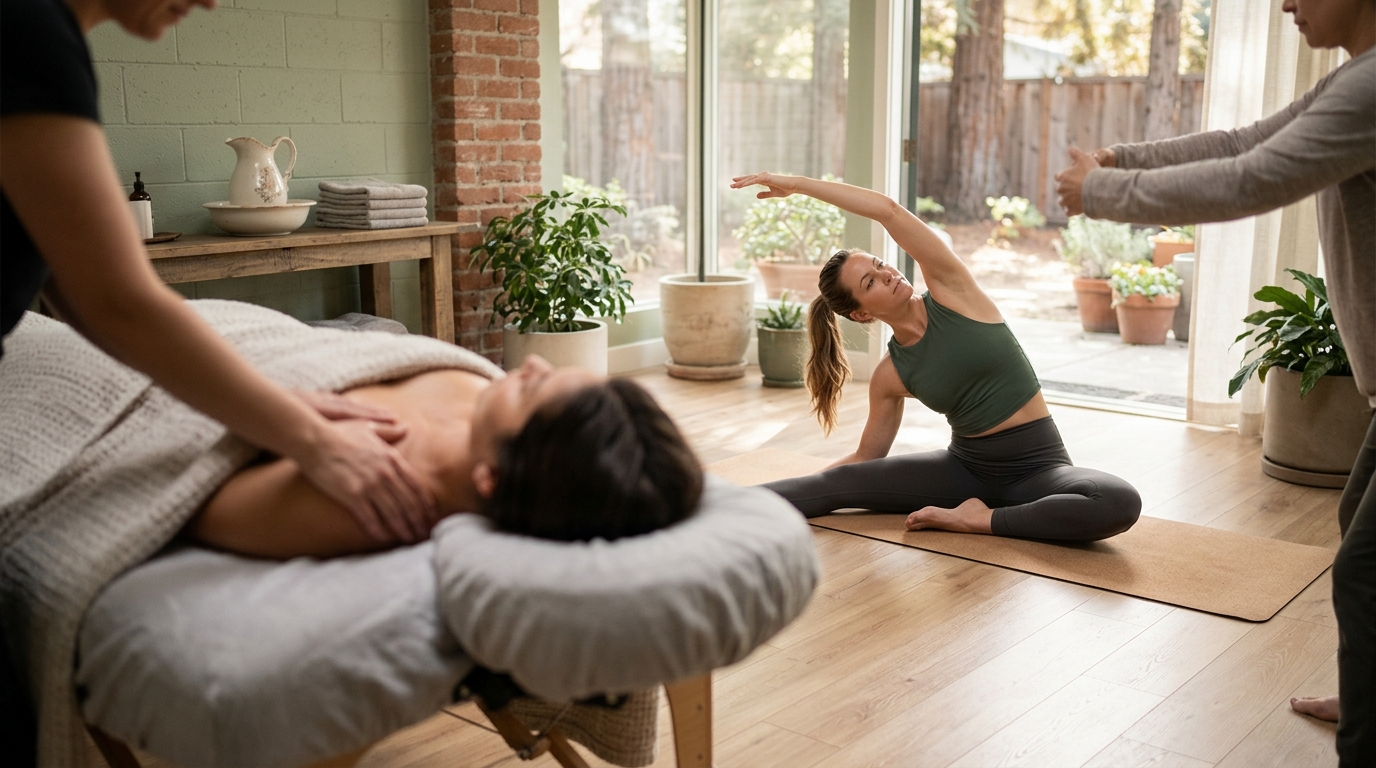
Combining massage and yoga in San Jose offers deep muscle tension relief, improved flexibility, and significant stress reduction. This guide details how Recovery Zone Care integrates the Hendrickson Method of orthopedic massage with Hatha Yoga and Qigong. We cover five core benefits: muscle tension relief, flexibility and mobility, stress reduction, posture improvement, and mind-body awareness. You will learn how these modalities work together to create a comprehensive recovery plan for local residents.
Muscle Tension Relief
Muscle tension is a primary driver of chronic pain and physical discomfort. Massage therapy is a legitimate clinical intervention for relieving this tension. A study published in the Annals of Family Medicine in 2014 found that 60-minute therapeutic massage sessions two or three times a week for four weeks relieved chronic neck pain better than no massage or fewer sessions. This evidence supports the use of regular manual therapy for pain management.
The Hendrickson Method Approach
The Hendrickson Method is an advanced system of orthopedic massage and manual therapy. It utilizes Wave Mobilization massage techniques, Joint Mobilization dynamic movements, and Muscle Energy Techniques. Patients experience deep, soothing relief without the pain and discomfort normally associated with traditional deep tissue massage. This method is particularly effective for sub-acute, acute, and chronic pain conditions.
Integrating Massage with Movement
Massage alone provides temporary relief, but combining it with movement therapy creates lasting change. At Recovery Zone Care, we integrate manual therapy with corrective exercise. This approach addresses the root cause of tension rather than just the symptom. By releasing tight muscles and then strengthening them through targeted movement, we prevent the tension from returning. This holistic strategy is essential for long-term recovery in the San Jose community.
Flexibility and Mobility
Flexibility is the ability of a joint to move through its full range of motion. Mobility is the ability to control that movement with strength and stability. While often used interchangeably, these concepts require different training approaches. Yoga and Qigong are excellent tools for developing both. They encourage the body to move in slow, controlled patterns that improve joint health.

Yoga for Joint Health
Hatha Yoga is a form of physical exercise that uses specific postures and breathing techniques. It is designed to improve flexibility and strength. At Recovery Zone Care, we teach Hatha Yoga to clients of all levels. The practice is accessible to those with mobility limitations. By holding poses, students learn to open tight areas and strengthen weak ones. This dual benefit is crucial for preventing injury and improving daily function.
Qigong for Gentle Movement
Wuji Qigong is a traditional Chinese practice that focuses on simple, easy-to-learn exercises. It is suitable for all ages and abilities. The movements are gentle and meditative. They help melt away stress and open up joints. Many students find that Qigong is less intimidating than traditional yoga. It provides a safe entry point for those who are new to movement therapy. We offer these classes both in-person and online to accommodate busy schedules.
Stress Reduction
Stress is a physiological state that triggers the release of cortisol and other hormones. Chronic stress leads to muscle tension, poor sleep, and anxiety. Massage therapy helps reduce stress by activating the parasympathetic nervous system. This is the rest and digest mode of the body. It lowers heart rate and blood pressure. The physical touch of massage also promotes the release of oxytocin, a hormone associated with bonding and relaxation.
The Science of Relaxation
Research shows that therapeutic massage can reduce anxiety and depression. A study in Complementary Therapies in Clinical Practice showed that people who received hand massage sessions slept better and had less anxiety than those who did not. This evidence supports the use of massage as a tool for mental health. It is not just a luxury, but a necessary component of overall wellness. By reducing stress, we allow the body to heal more effectively.
Movement as Meditation
Yoga and Qigong are moving meditations. They require focus on the breath and the body. This mindfulness practice helps quiet the mind. It reduces the mental chatter that contributes to stress. By combining the physical relaxation of massage with the mental clarity of movement, we create a powerful stress reduction protocol. This approach is ideal for the fast-paced environment of San Jose. It provides a necessary counterbalance to the demands of modern life.
Posture Improvement
Posture is the position of the body when standing, sitting, or lying down. Poor posture is a common cause of back and neck pain. It often results from prolonged sitting at a desk or looking down at a phone. Corrective exercise therapy is a type of physical therapy used to improve posture, balance, and coordination. It involves identifying movement dysfunction and developing a plan of action. This systematic process helps people move well and avoid injury.
Identifying Movement Dysfunction
At Recovery Zone Care, we screen for movement dysfunction during our assessments. We look for imbalances in muscle strength and flexibility. We also examine breathing patterns and gait. These subconscious movements often contribute to poor posture. By addressing these underlying issues, we can improve posture more effectively than through stretching alone. This comprehensive approach ensures that clients can maintain good posture in their daily lives.
Practical Applications
Mind Body Awareness
Mind-body awareness is the ability to perceive and understand the connection between mental and physical states. It is a core component of holistic health. Yoga and Qigong are excellent tools for developing this awareness. They require students to pay close attention to their breath, body position, and movement. This practice helps clients become more attuned to their physical needs. It allows them to respond to pain and stress more effectively.
Mindfulness in Movement
Mindfulness is the practice of paying attention to the present moment without judgment. It is a key element of yoga and Qigong. By practicing mindfulness, clients learn to observe their pain without reacting to it. This changes their relationship with pain. It reduces the fear and anxiety that often accompany chronic pain. This shift in mindset is crucial for long-term recovery. It empowers clients to take an active role in their own healing.
Building Resilience
Mind-body awareness also builds resilience. It helps clients cope with the challenges of daily life. By developing a strong connection between mind and body, clients become more adaptable. They are better able to handle stress and change. This resilience is a valuable asset in any context. It contributes to overall well-being and quality of life. At Recovery Zone Care, we emphasize this aspect of our practice. We believe that true healing involves the whole person, not just the body.
Therapy Comparison
The following table summarizes the primary benefits of the modalities offered at Recovery Zone Care. This comparison helps you understand how each therapy contributes to your overall recovery plan.
| Modality | Primary Focus | Key Benefit | Best For |
|---|---|---|---|
| Hendrickson Method Massage | Manual Therapy | Deep muscle tension relief | Acute and chronic pain |
| Hatha Yoga | Strength and Flexibility | Joint mobility and stability | Building strength and balance |
| Wuji Qigong | Gentle Movement | Stress reduction and joint opening | Beginners and those with limitations |
| Corrective Exercise | Movement Pattern | Posture improvement | Preventing injury and improving function |
Key Takeaways
- Massage therapy is an evidence-based treatment for chronic pain and stress reduction.
- Combining massage with movement therapy creates lasting changes in muscle tension and posture.
- Yoga and Qigong are accessible practices that improve flexibility and mobility for all levels.
- Mind-body awareness is a crucial component of holistic health and pain management.
- Corrective exercise therapy helps identify and fix movement dysfunction to improve posture.
- Recovery Zone Care offers a comprehensive program that integrates manual therapy and movement.
- Regular practice of these modalities can significantly improve quality of life in San Jose.
Frequently Asked Questions
Is massage therapy covered by insurance?
Coverage varies by insurance provider. Some plans cover therapeutic massage for specific conditions. It is best to check with your insurance company to determine your benefits. We can provide documentation of your treatment if needed for reimbursement.
Do I need to be flexible to start yoga?
No, you do not need to be flexible to start yoga. Yoga is for everyone, regardless of age or ability. The practice is designed to meet you where you are. You will improve your flexibility over time with consistent practice. Our classes are accessible to all levels.
How often should I get a massage?
The frequency depends on your individual needs and goals. For chronic pain, weekly or bi-weekly sessions may be beneficial. For maintenance, monthly sessions may be sufficient. We will work with you to develop a personalized treatment plan that fits your schedule and budget.
What is the difference between yoga and Qigong?
Yoga is an Indian practice that focuses on postures and breath. Qigong is a Chinese practice that focuses on gentle movement and energy flow. Both are beneficial for health and wellness. They differ in their cultural origins and specific techniques. You can choose the one that resonates with you most.
Can massage help with post-surgical recovery?
Yes, massage can help with post-surgical recovery. It can reduce swelling, improve blood flow, and prevent scar tissue. It is important to wait until your surgeon clears you for massage. We offer post-surgical massage that is specifically designed for this purpose.
Where is Recovery Zone Care located?
Recovery Zone Care is located at 1190 South Bascom Ave, Suite 134, San Jose, CA 95128. We are easily accessible from various parts of the city. We also offer online classes for those who prefer to practice from home.
Do you offer online classes?
Yes, we offer online classes for Qigong and other movement therapies. These classes are conducted via Zoom. They are a great option for those who cannot attend in-person sessions. You can book online classes through our website.
How do I book an appointment?
You can book an appointment by contacting us directly or through our online booking system. We offer a first-time client deal for new customers. Please reach out to us to schedule your initial consultation.
Conclusion
Combining massage and yoga offers a powerful approach to pain relief and wellness. At Recovery Zone Care, we provide a comprehensive program that addresses the whole person. Our integration of the Hendrickson Method, Hatha Yoga, and Qigong ensures that you receive the best possible care. We are dedicated to helping you find meaningful recovery and healing. To start your journey, to schedule your first session.