
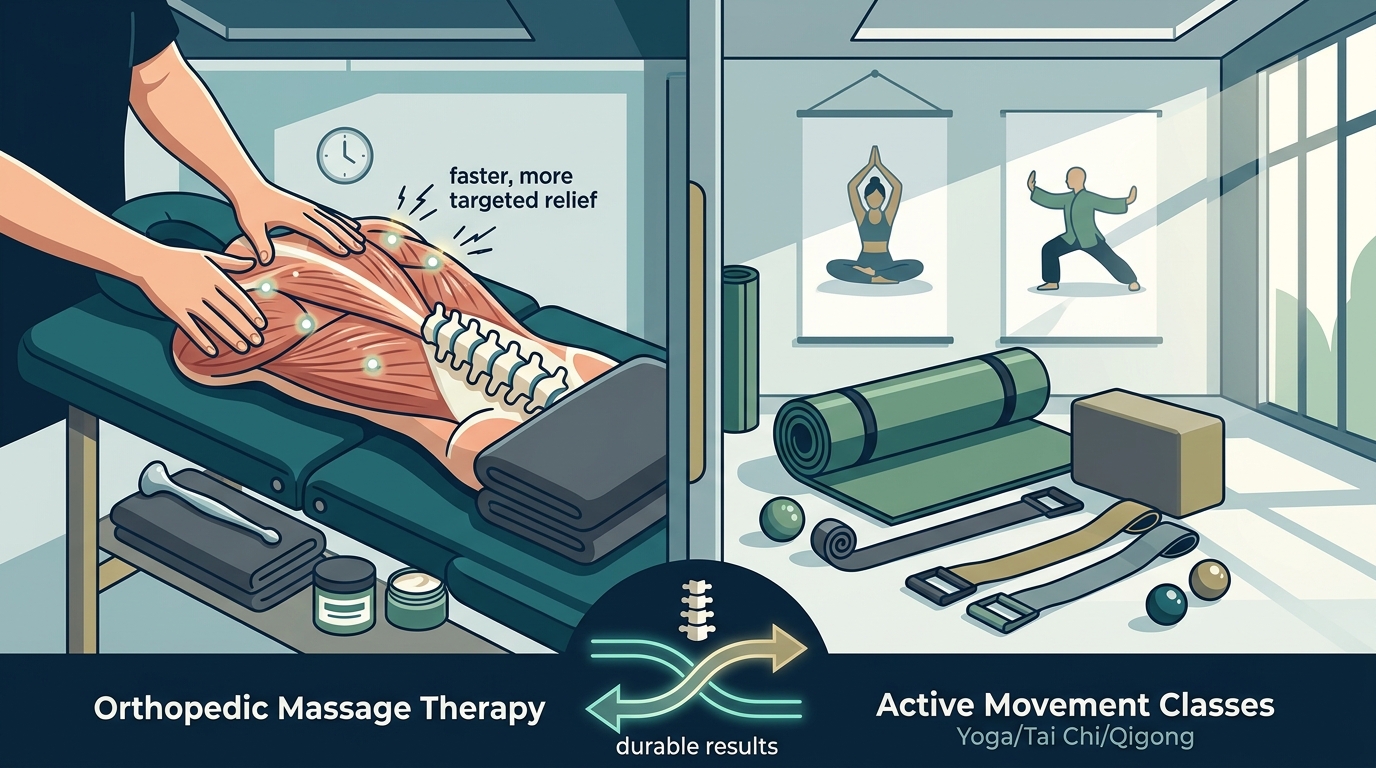
For chronic back pain, orthopedic massage therapy often provides faster, more targeted relief than active movement classes alone. However, combining both approaches yields the most durable results. This guide explores the efficacy of hands-on therapy versus active movement, helping you choose the right path for your recovery.
Massage Therapy Efficacy
Massage therapy is a hands-on treatment that manipulates soft tissues to reduce pain and improve mobility. For chronic back pain, specific techniques like the Hendrickson Method offer a structured approach to relief. This method utilizes Wave Mobilization, Joint Mobilization, and Muscle Energy Techniques to address sub-acute, acute, and chronic pain efficiently.
The Science of Pain Relief
Research supports the use of therapeutic massage for pain management. A study published in the Annals of Family Medicine in 2014 found that 60-minute therapeutic massage sessions two or three times a week for four weeks relieved chronic neck pain better than no massage or fewer sessions. While this study focused on neck pain, the mechanisms apply broadly to the musculoskeletal system. Massage relaxes painful muscles, tendons, and joints, which reduces the strain on the spine.
Targeting Chronic Back Pain
Chronic back pain often involves deep tissue tension and restricted joint movement. Traditional deep tissue massage can be painful, but advanced orthopedic massage techniques provide deep relief without the discomfort. At Recovery Zone Care, we utilize the Hendrickson Method to achieve this balance. Patients experience soothing relief while addressing the root causes of their pain. This approach is particularly effective for those who have tried other forms of massage without lasting results.
Post-Surgical and Acute Considerations
For individuals recovering from surgery or dealing with acute flare-ups, massage can play a critical role. Post-surgical massage helps reduce swelling, prevent scar tissue, and improve blood flow to healing areas. It also helps manage the stress and anxiety that often accompany recovery. By addressing these factors, massage therapy supports a smoother and faster healing process.
Active Movement Effectiveness
Active movement therapy is a practice that uses specific exercises to strengthen the body and improve stability. Unlike passive treatments, active movement requires the patient to engage their muscles and joints. This engagement is crucial for long-term recovery and injury prevention. At Recovery Zone Care, we offer classes in Hatha Yoga, Wuji Qigong, and Yang-style Tai Chi to support this approach.
The Role of Movement in Recovery
The human body is designed for movement. Without it, health deteriorates, leading to pain and stiffness. Active movement classes help improve joint mobility, muscle flexibility, and strength in a slow and accessible manner. These classes are designed to be suitable for all levels of fitness and mobility, including those with significant limitations. By moving gently and consistently, patients can reduce their vulnerability to common injuries.
Mind-Body Connection
Practices like Qigong and Tai Chi emphasize the connection between mind and body. These ancient techniques focus on breath, intention, and gentle movement. This holistic approach helps reduce stress, which is a major contributor to chronic pain. By calming the nervous system, active movement classes can lower the perception of pain. This makes them a valuable complement to hands-on therapy.
Building Long-Term Resilience
While massage provides immediate relief, active movement builds long-term resilience. Corrective exercise therapy, for example, helps improve posture, balance, and coordination. It addresses poor body mechanics that may have contributed to the initial injury. By learning to move well, patients can prevent future episodes of pain. This proactive approach is essential for anyone seeking a lasting solution to chronic back pain.
Comparison Table
| Feature | Massage Therapy | Active Movement Classes |
|---|---|---|
| Primary Goal | Pain relief and tissue relaxation | Strength, stability, and mobility |
| Passive vs Active | Passive (patient receives treatment) | Active (patient performs exercises) |
| Immediate Effect | High (reduces pain and tension) | Moderate (improves range of motion) |
| Long-Term Benefit | Moderate (requires regular sessions) | High (builds resilience and strength) |
| Best For | Acute pain, post-surgery, deep tension | Chronic pain, injury prevention, posture |
Key Takeaways
- Massage therapy provides fast, targeted relief for chronic back pain by relaxing muscles and joints.
- Active movement classes build long-term strength and stability, preventing future injuries.
- The Hendrickson Method offers deep relief without the pain of traditional deep tissue massage.
- Combining both approaches yields the most comprehensive and durable results.
- Mind-body practices like Qigong and Tai Chi help reduce stress, a key factor in chronic pain.
- Post-surgical massage can reduce swelling and prevent scar tissue, aiding faster recovery.
- Corrective exercise therapy addresses poor body mechanics to improve posture and balance.
- Recovery Zone Care offers both hands-on therapy and movement classes in San Jose.
Frequently Asked Questions
Is massage therapy better than exercise for chronic back pain?
Neither is universally better. Massage provides immediate relief, while exercise builds long-term strength. The best approach often combines both for comprehensive care.
What is the Hendrickson Method?
The Hendrickson Method is an advanced system of orthopedic massage and manual therapy. It uses Wave Mobilization, Joint Mobilization, and Muscle Energy Techniques to treat pain efficiently.
Can I do Qigong if I have limited mobility?
Yes. Wuji Qigong exercises can be done from a standing or seated position. They are suitable for all abilities and ages, making them accessible to those with mobility limitations.
How often should I get a massage for chronic pain?
For chronic pain, regular sessions are often recommended. A study suggests 60-minute sessions two or three times a week for four weeks can be effective. Your therapist can tailor a plan to your needs.
Does massage help with post-surgical recovery?
Yes. Post-surgical massage helps reduce swelling, prevent scar tissue, and improve blood flow. It also helps manage stress and anxiety during the recovery phase.
Where can I find these services in San Jose?
Recovery Zone Care offers both massage therapy and movement classes in San Jose. You can book an appointment online or directly to discuss your needs.
Conclusion
Choosing between massage therapy and active movement classes for chronic back pain depends on your specific needs and goals. Massage offers fast relief, while movement builds long-term resilience. At Recovery Zone Care, we believe in a holistic approach that combines both. Our team of certified therapists and instructors can help you create a personalized plan for your recovery. Book a session today and start your journey toward pain-free living.