

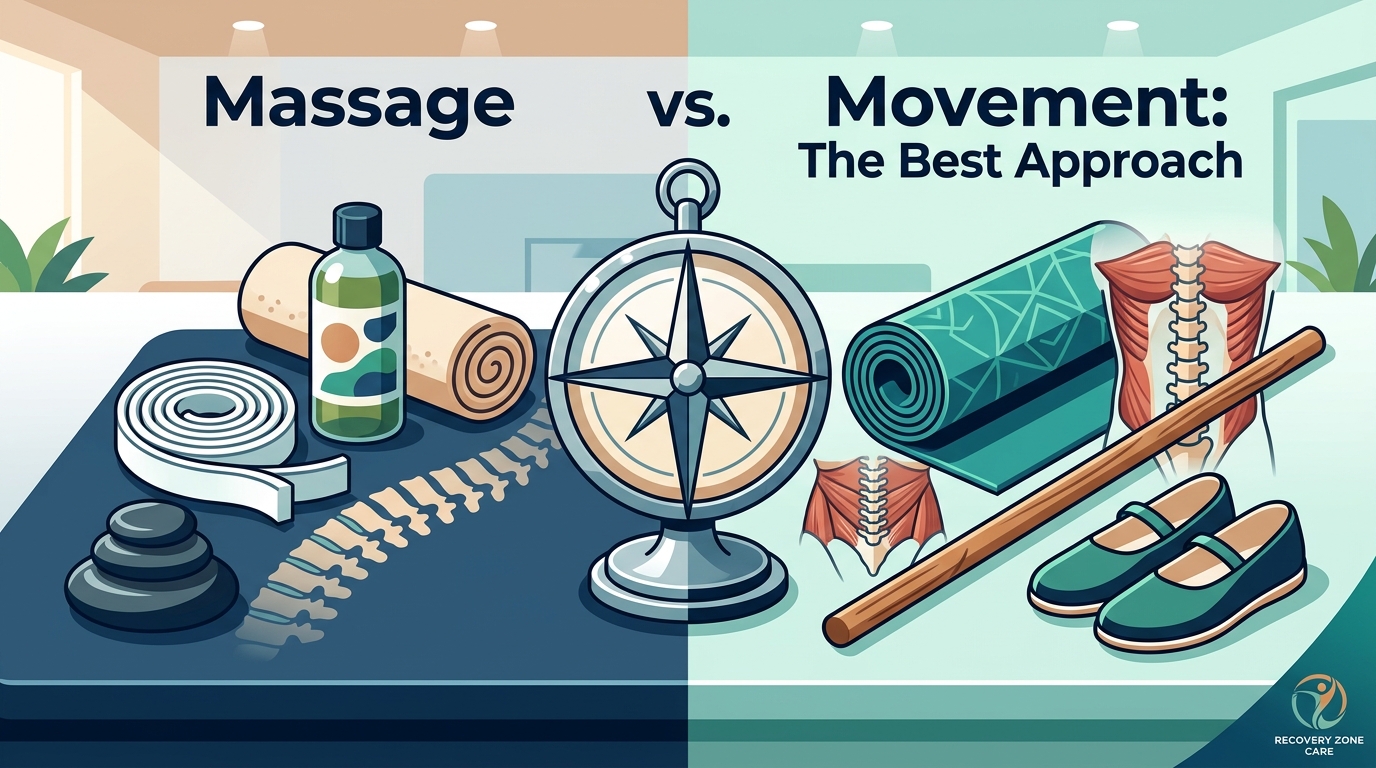
For chronic back pain, a combined approach of targeted manual therapy and active movement classes yields the best long-term results. While massage provides immediate relief, movement builds the structural stability required to prevent recurrence. This guide explores how Swedish, deep tissue, and myofascial release techniques compare to active movement therapies for managing persistent spinal discomfort.
Swedish Massage for Back Pain
Swedish massage is a foundational manual therapy technique that uses long, gliding strokes, kneading, and friction to relax superficial muscle layers. It is often the first line of defense for individuals experiencing general tension and mild discomfort. The primary goal of this modality is to reduce stress and promote circulation, which helps flush out metabolic waste from the muscles.
Benefits for Chronic Conditions
For chronic back pain, Swedish massage helps lower the overall stress response in the body. High stress levels often lead to increased muscle tension in the lower back. By inducing a state of relaxation, this technique can reduce the perceived intensity of pain. It is particularly useful for clients who find deeper pressure techniques too intense or who are new to massage therapy.
Limitations in Structural Recovery
While effective for relaxation, Swedish massage does not typically address deep structural dysfunctions. It works primarily on the surface level of the musculature. For chronic conditions involving joint misalignment or deep fascial restrictions, this approach may provide only temporary relief without long-term structural changes.
Deep Tissue Massage for Back Pain
Deep tissue massage is a specialized technique that targets the deeper layers of muscle and connective tissue. It uses slower strokes and deeper pressure to break up adhesions and chronic patterns of tension. This approach is often recommended for individuals with specific areas of pain that have persisted despite other treatments.
Addressing Adhesions
Chronic pain often results from adhesions, which are bands of scar tissue that form in muscles and fascia. Deep tissue massage works to break these adhesions down, restoring normal tissue mobility. This can be uncomfortable during the session, but it is often necessary to resolve deep-seated pain. The pressure applied is firm but controlled, focusing on specific trigger points.
Integration with Movement
Deep tissue work is most effective when paired with active movement. After breaking up adhesions, the body needs to move through its full range of motion to maintain the new tissue length. Without movement, the tissues can quickly return to their previous restricted state. This is why a holistic approach is superior to passive treatment alone.
Myofascial Release for Back Pain
Myofascial release is a gentle, hands-on technique that focuses on the fascia, the connective tissue that surrounds muscles and organs. It is a low-pressure method that aims to restore the natural glide and slide of the fascial layers. This approach is particularly effective for chronic pain that is not responding to traditional deep tissue work.
The Role of Fascia in Pain
Fascia is a highly sensitive network that can hold tension and restrict movement. When fascia becomes restricted, it can pull on muscles and joints, causing pain and dysfunction. Myofascial release works to release these restrictions, allowing the body to move more freely. It is a subtle technique that requires a skilled practitioner to detect and release tension.
Complementing Active Therapy
Myofascial release is an excellent bridge between passive massage and active movement. It prepares the body for exercise by reducing fascial restrictions. When combined with movement-based therapies, it can lead to significant improvements in range of motion and pain levels. This modality is often used in conjunction with other techniques to create a comprehensive treatment plan.
Comparing Modalities
The following table summarizes the key differences between these massage approaches and active movement classes. Each modality serves a different purpose in the recovery process. Understanding these differences helps in selecting the right combination for your specific needs.
| Modality | Primary Focus | Pressure Level | Best For |
|---|---|---|---|
| Swedish Massage | Superficial muscles and relaxation | Light to Medium | General tension and stress |
| Deep Tissue Massage | Deep muscle layers and adhesions | Firm to Deep | Specific trigger points and chronic tension |
| Myofascial Release | Connective tissue and fascia | Light to Gentle | Fascial restrictions and range of motion |
| Active Movement Classes | Strength, stability, and mobility | Self-directed | Long-term structural stability and prevention |
Active movement classes, such as yoga and Qigong, focus on building the strength and stability needed to support the spine. They are not a replacement for manual therapy but a necessary complement. The combination of passive release and active strengthening creates a robust foundation for recovery.
Key Takeaways
- Swedish massage is best for reducing overall stress and mild tension.
- Deep tissue massage targets specific adhesions and chronic muscle patterns.
- Myofascial release addresses the connective tissue that surrounds muscles.
- Active movement classes build the strength and stability needed for long-term relief.
- A combined approach of manual therapy and movement is more effective than either alone.
- Consistency in both treatment and exercise is key to managing chronic pain.
- Individual needs vary, so a personalized plan is essential for optimal results.
Frequently Asked Questions
Is massage therapy a cure for chronic back pain?
Massage therapy is not a cure but a powerful tool for management. It helps reduce pain and improve function, but long-term relief often requires addressing underlying movement patterns and strength deficits.
How often should I get a massage for chronic back pain?
Frequency depends on the severity of your condition. Initially, weekly sessions may be beneficial. As pain decreases, you can transition to bi-weekly or monthly maintenance sessions while increasing your movement practice.
Can I do myofascial release at home?
While self-massage tools can help, professional myofascial release is more effective for deep restrictions. A trained practitioner can identify and release tension that is difficult to reach on your own.
Which is better, deep tissue or myofascial release?
Neither is universally better. Deep tissue works on muscle, while myofascial release works on connective tissue. Many practitioners use both in a single session to address different layers of the body.
Do active movement classes replace the need for massage?
No, they complement each other. Movement builds strength, while massage releases tension. Using both together creates a more comprehensive approach to pain management.
How long does it take to see results?
Results vary by individual. Some people feel relief after one session, while others may need several weeks of consistent treatment and exercise. Patience and consistency are crucial.
Is deep tissue massage painful?
It can be uncomfortable, but it should not be painful. Communication with your therapist is key to ensuring the pressure is within your tolerance. The goal is to release tension, not to cause injury.
Can I combine these therapies with other treatments?
Yes, these therapies can be integrated with other treatments like physical therapy or chiropractic care. Always inform your healthcare providers about all the treatments you are receiving.
Conclusion
Managing chronic back pain requires a multifaceted approach that addresses both the symptoms and the underlying causes. While Swedish, deep tissue, and myofascial release techniques offer valuable relief, they are most effective when paired with active movement. At Recovery Zone Care, we integrate these manual therapies with movement-based classes to provide a comprehensive solution. Our goal is to help you not just manage pain, but to move freely and live fully. If you are struggling with chronic back pain, consider a holistic approach that combines the best of both worlds.